

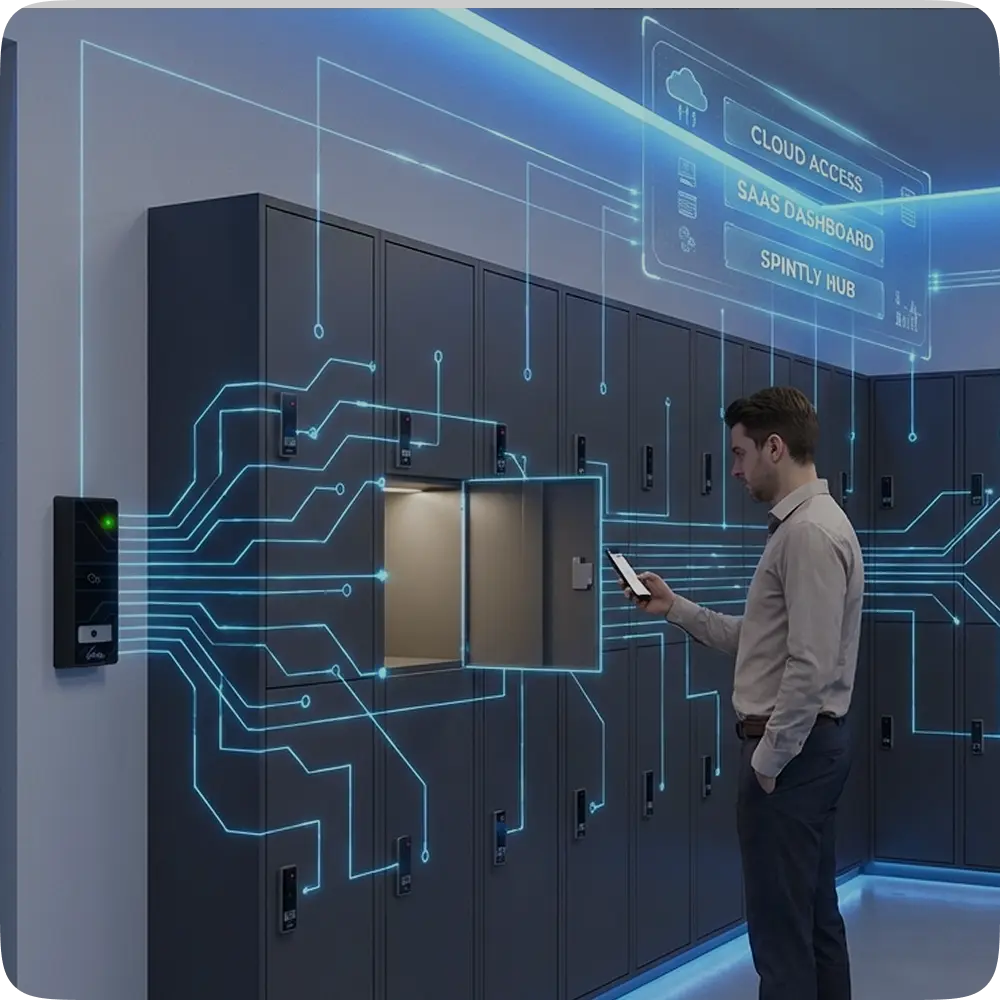
How OptiSpaces.ai Powers Smart Locker Systems with Multi-Credential Access
How OptiSpaces.ai Powers Smart Locker Systems with Multi-Credential Access 12 min reading timeUpdated on July 23,
8 min reading time
Updated on June 26, 2026
Share this article
Commercial real estate is in the middle of a quiet but significant shift.
Buildings that were considered premium five years ago are being benchmarked against a new standard. Tenants today are comparing properties not just on location, floor plate, and rent. They are asking about technology infrastructure, building management systems, and increasingly, how access works.
It sounds like a minor detail. It is not.
Access is the first experience a tenant, employee, or visitor has with a building every single day. And in a market where tenant retention is everything, that daily experience matters more than most property managers have historically given it credit for.
Most commercial buildings still run on a combination of physical keys, RFID cards, and a reception desk to handle the gaps. It is a system that works in a narrow sense. People do get in and out.
But the operational cost of maintaining it is higher than it appears on the surface.
Consider a mid-sized office building with multiple tenants. Each tenant has a different headcount, different access requirements, and a different rate of employee turnover. Every time a new employee joins, a card needs to be issued. Every time someone leaves, that card needs to be tracked down and deactivated. Every time a tenant reconfigures their office or changes their access zones, someone has to update the system manually.
Property managers end up spending a disproportionate amount of time on access administration. Time that could go towards higher-value facility management work.
There is also the security dimension. Physical cards can be shared, lost, or cloned. In a multi-tenant building, a compromised credential is not just one company’s problem. It is the building’s problem. And the property manager’s liability.
Smart access control replaces physical credentials with digital ones, managed through a cloud platform, and delivered via a smartphone or a digital key.
The practical change is significant.
Access can be provisioned and revoked remotely, in real time, without anyone needing to be physically present. A new tenant moving in on a Monday can have their entire team set up over the weekend. A contractor hired for a two-week renovation can be given time-limited access that expires automatically when the job is done. A visitor can be pre-registered by their host and walk in without stopping at reception.
Every entry event is logged. Property managers can see exactly who accessed which floor or zone at what time. If there is a security incident, the audit trail is there. If a tenant asks for an access report, it takes seconds to generate.
For multi-building portfolios, the difference is even more pronounced. One platform, one dashboard, visibility across every property. No siloed systems, no manual reconciliation between sites.
There is a commercial real estate reality that is worth stating plainly. Tenants have more options than they used to.
Flexible workspace operators, managed office providers, and newer developments have raised the bar on what a good building experience looks like. Legacy buildings that cannot match that standard are losing tenants to those that can. And they are not always losing on rent.
Smart access is one of the more visible technology upgrades a building can make because tenants interact with it every day. A building where entry is frictionless, visitor management is seamless, and access issues are resolved remotely without waiting for a facilities team sends a clear signal about how the property is managed overall.
That signal contributes to lease renewals in ways that are hard to quantify but very real.
One benefit that often gets overlooked in the access control conversation is what the data enables beyond security.
Smart access systems generate real-time occupancy data. Property managers can see which floors are occupied, at what times, and to what density. That information feeds directly into decisions about HVAC scheduling, lighting automation, cleaning rosters, and maintenance planning.
A floor that is consistently empty on Friday afternoons does not need to be cooled and lit at full capacity. A lobby that sees peak traffic between 9 and 10am can have staffing aligned accordingly. Small optimisations in aggregate translate into meaningful reductions in operating costs and energy consumption.
For buildings working towards green certifications or ESG reporting requirements, that operational data is increasingly valuable.
Spintly’s cloud-based access control platform is built for commercial real estate environments. It supports mobile credentials via BLE and NFC, integrates with existing building infrastructure, and gives property managers a single dashboard to manage access across multiple tenants and locations.
The visitor management system handles pre-registration, QR-based check-in, and host notifications, removing the friction from front desk operations. Tenant management features allow different access policies per floor or zone. And because the platform is wireless and cloud-based, deployment does not require extensive retrofitting or new wiring.
For property managers looking to upgrade their buildings and strengthen their tenant proposition at the same time, it is a practical starting point.
How OptiSpaces.ai Powers Smart Locker Systems with Multi-Credential Access 12 min reading timeUpdated on July 23,
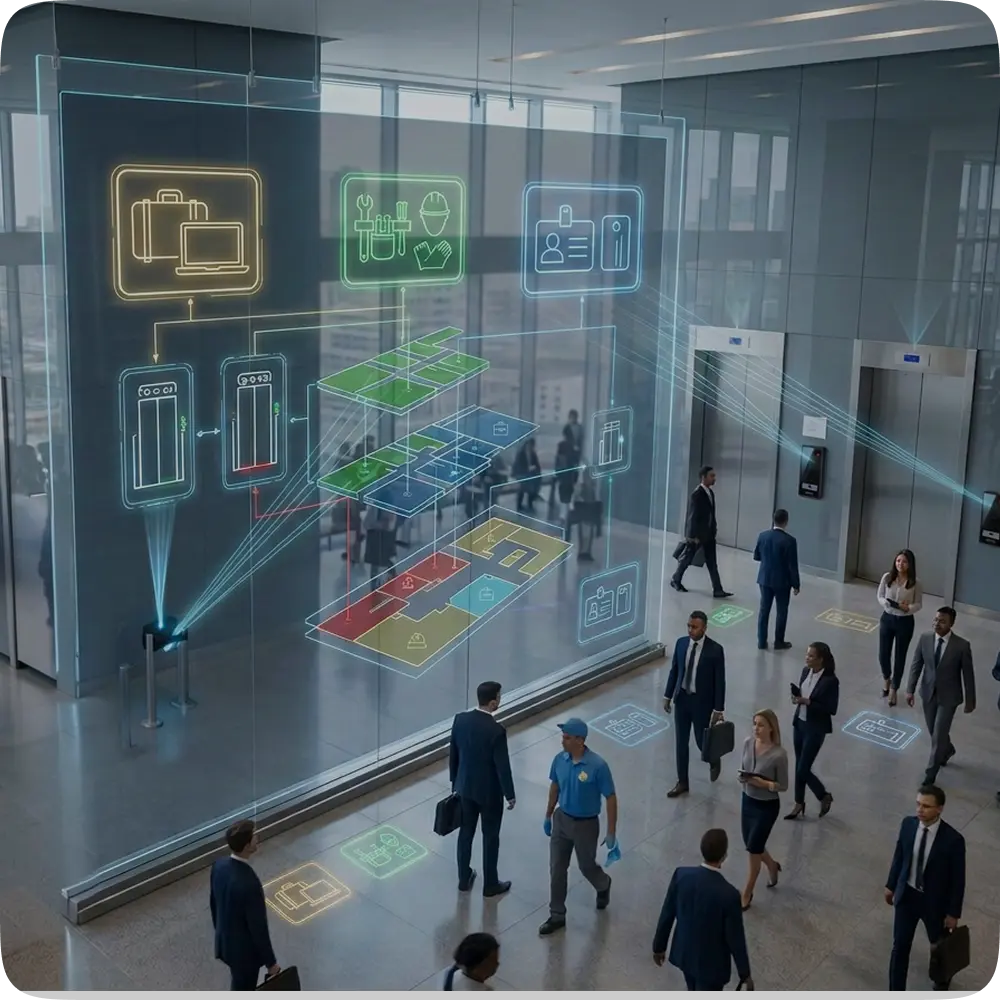
Designing Role-Based Elevator Access in Multi-Tenant Buildings with OptiSpaces.ai 12 min reading timeUpdated on July 23,
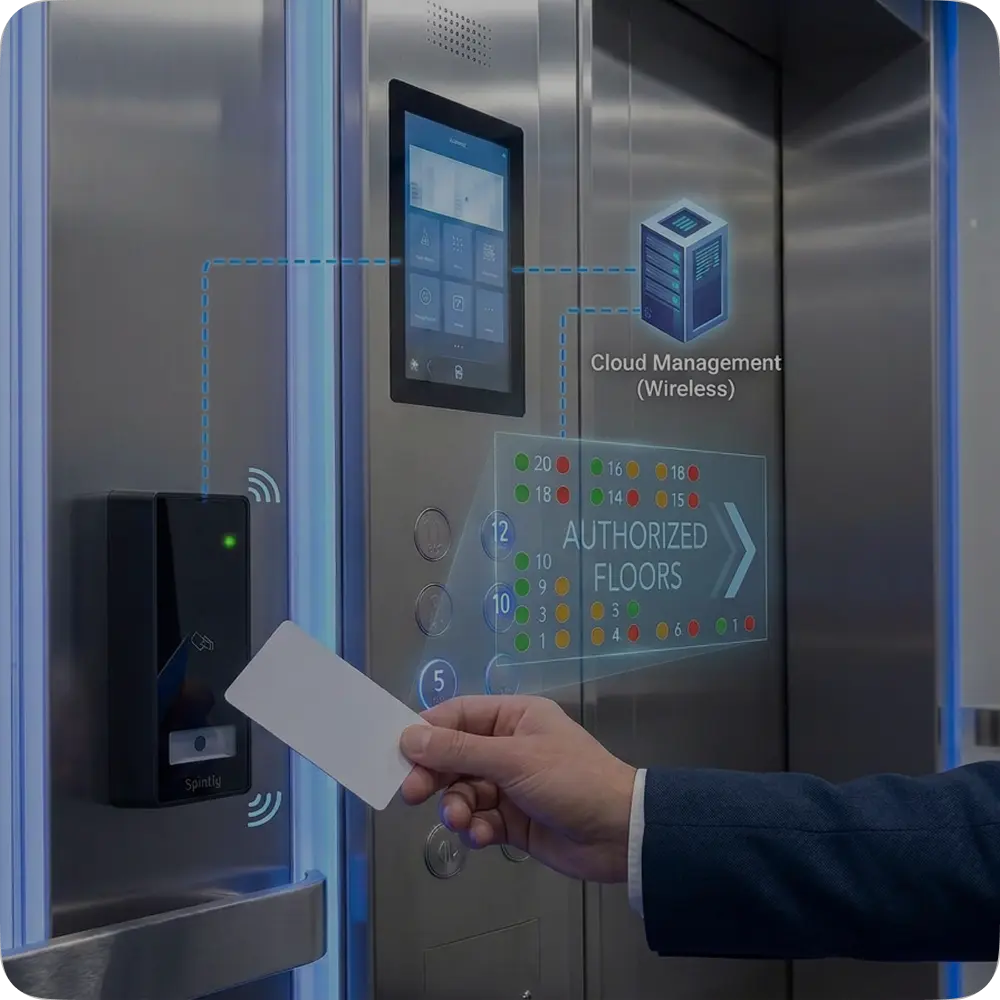
How Elevator Access Control Works in a Wireless, Multi-Credential Environment 12 min reading timeUpdated on July
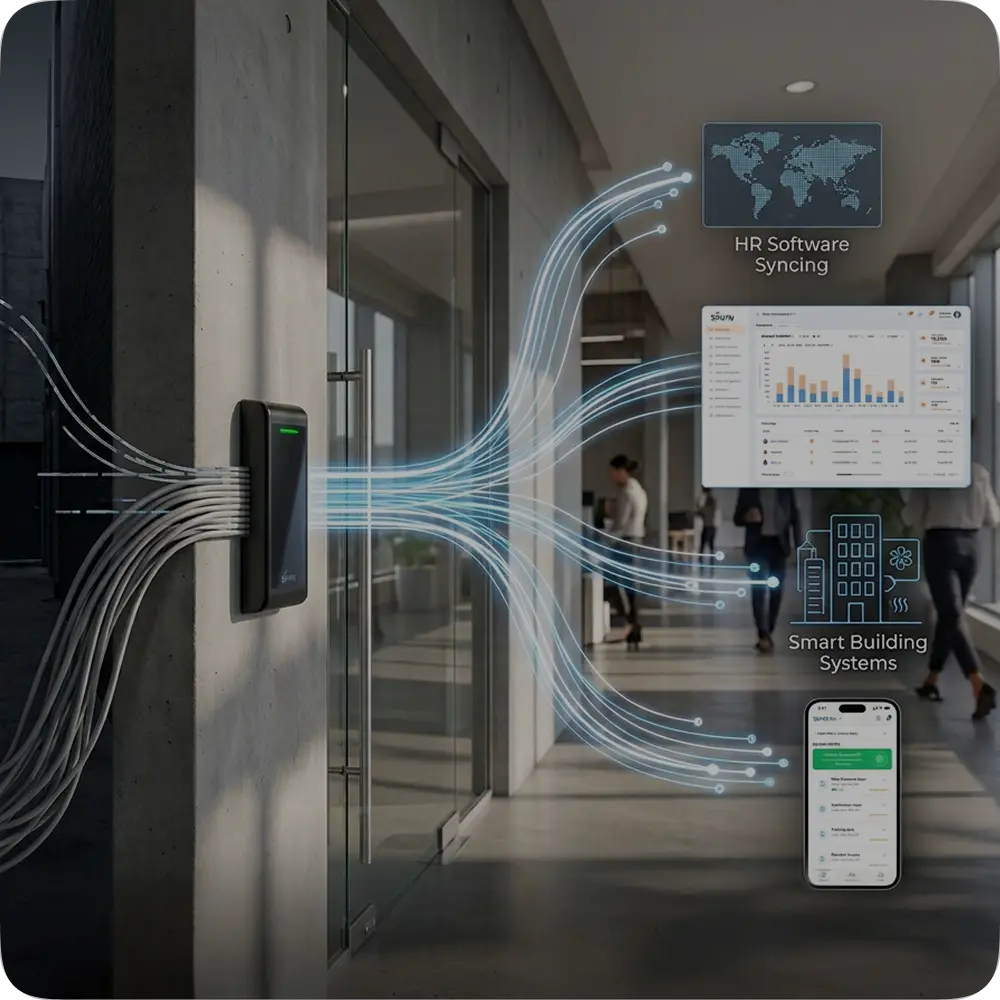
API-First Access Control: Why Openness Wins 7 min reading timeUpdated on July 9, 2026Share this article
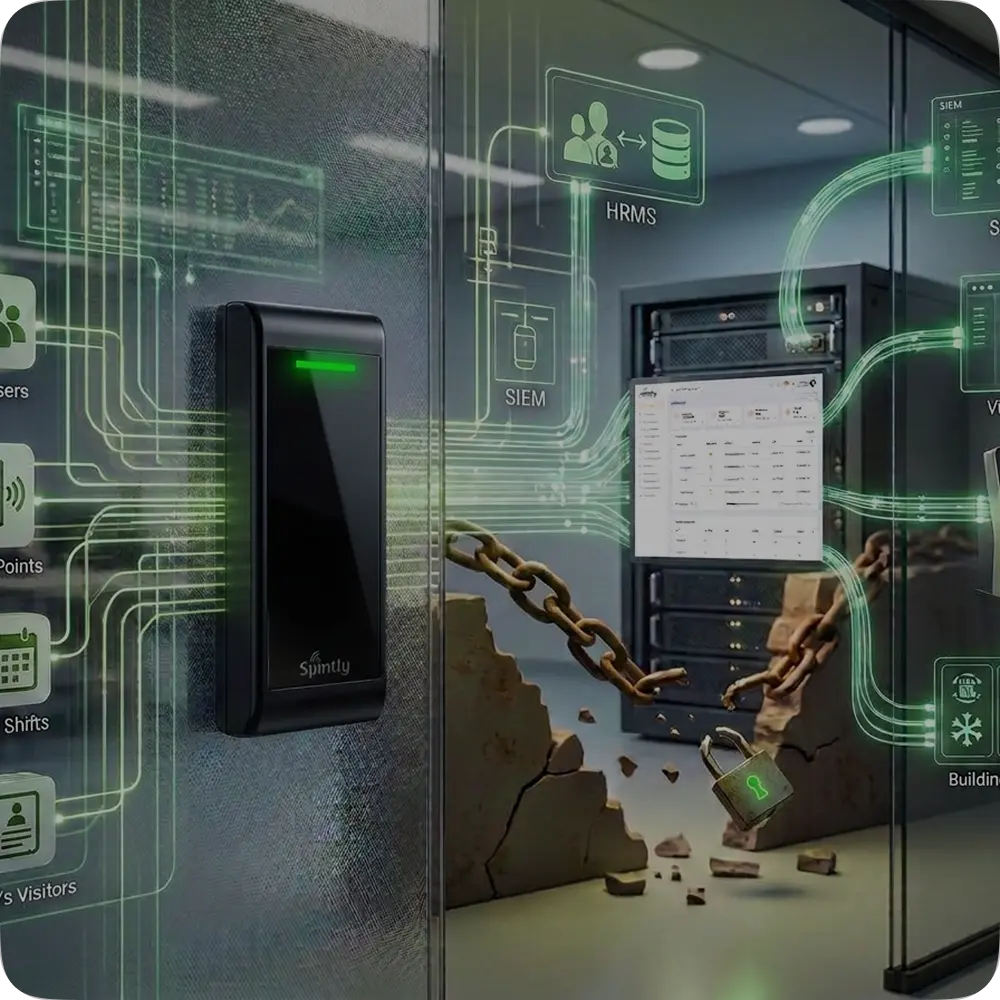
Predictive Security: How AI Can Prevent Unauthorized Access 9 min reading timeUpdated on July 9, 2026Share
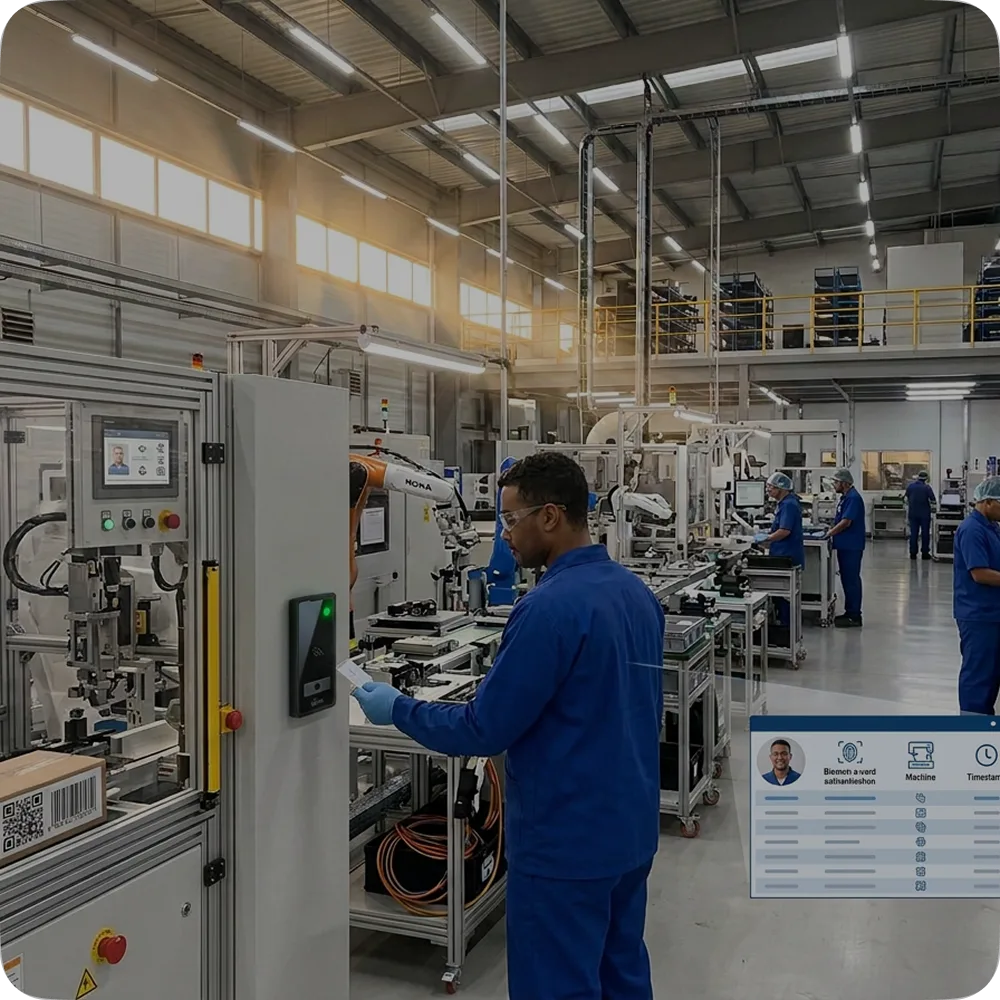
Access Control in Manufacturing: Traceability and Compliance 10 min reading timeUpdated on June 26, 2026Share this
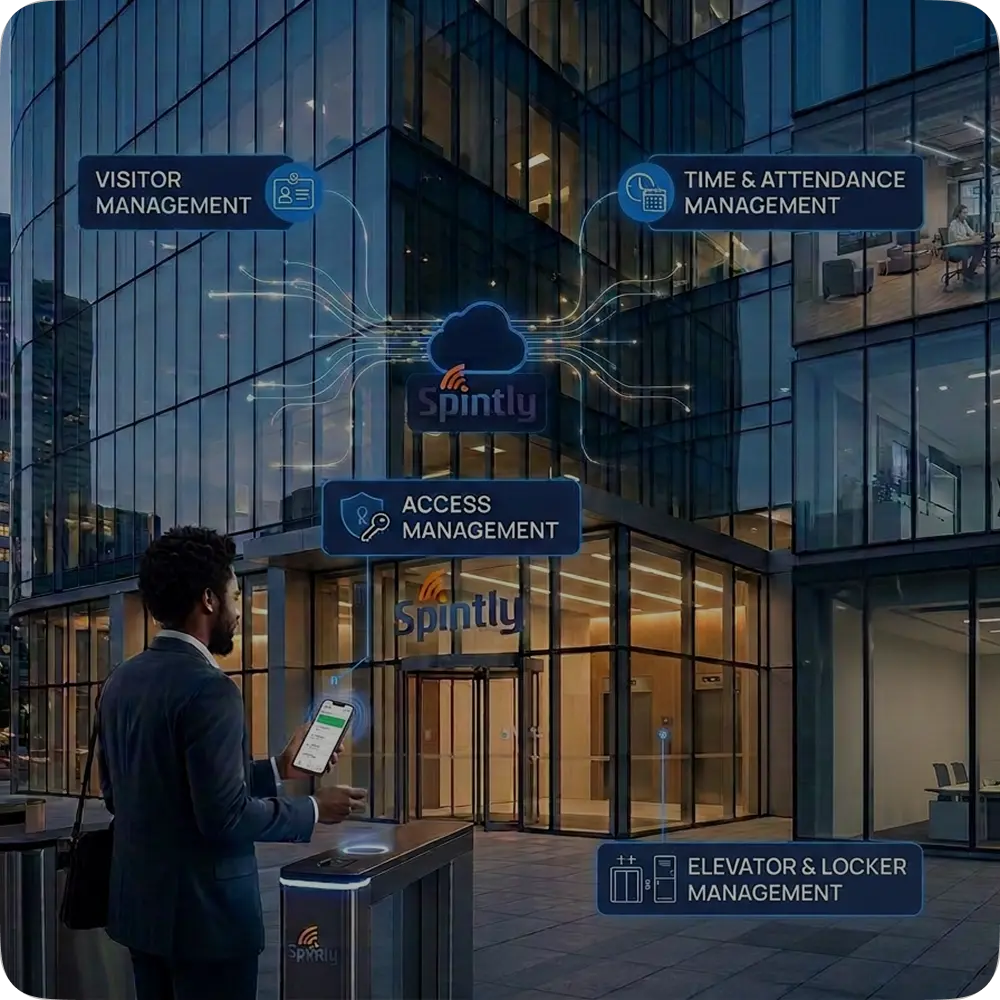
How Access Control Fits into the PropTech Ecosystem 8 min reading timeUpdated on June 26, 2026Share
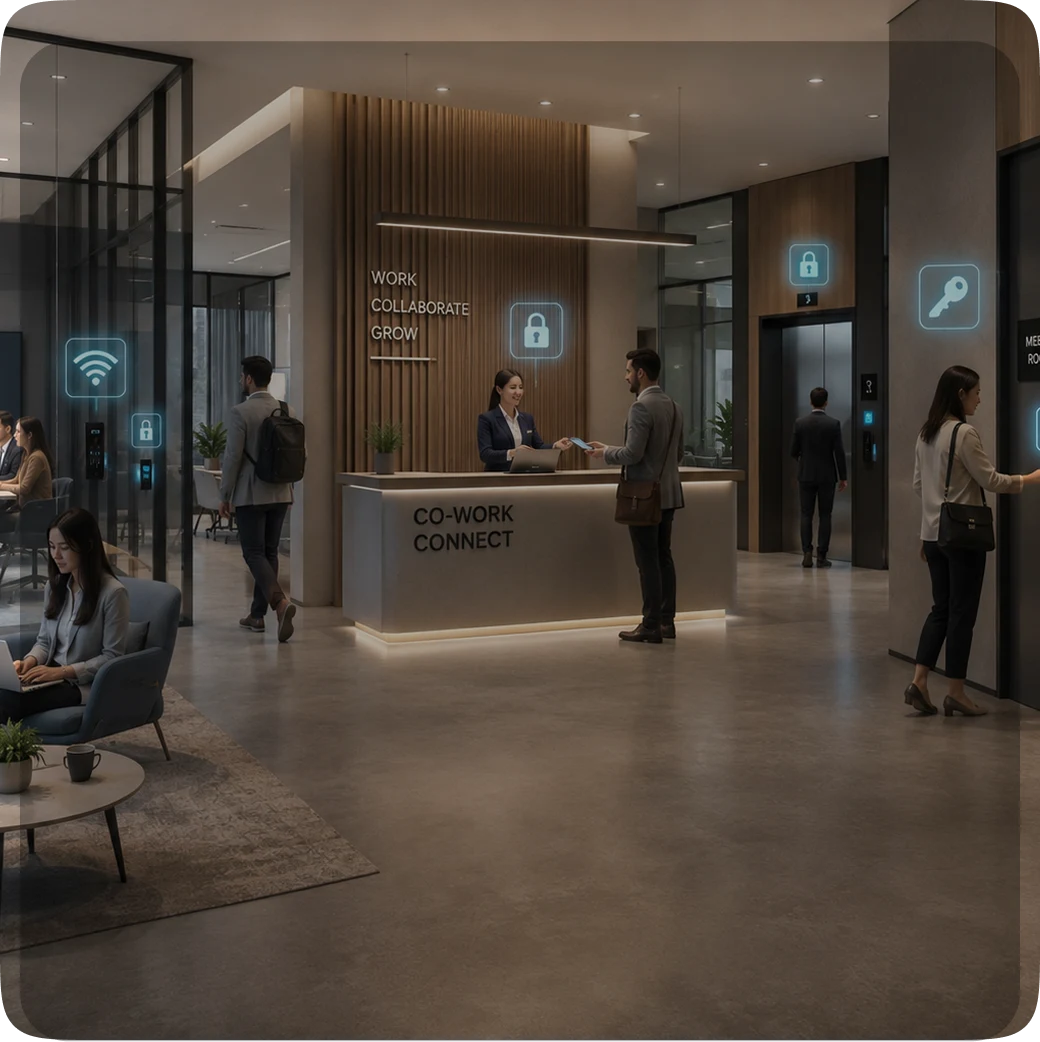
How Co-Working Spaces Simplify Access with Wireless Systems 10 min reading timeUpdated on June 26, 2026Share
Upgrading to Wireless Access Control: A Guide for Commercial Buildings 10 min reading timeUpdated on June
Inside Spintly’s Credential Management Platform- Architecture, Flow, and Core Benefits 10 min reading timeUpdated on May