

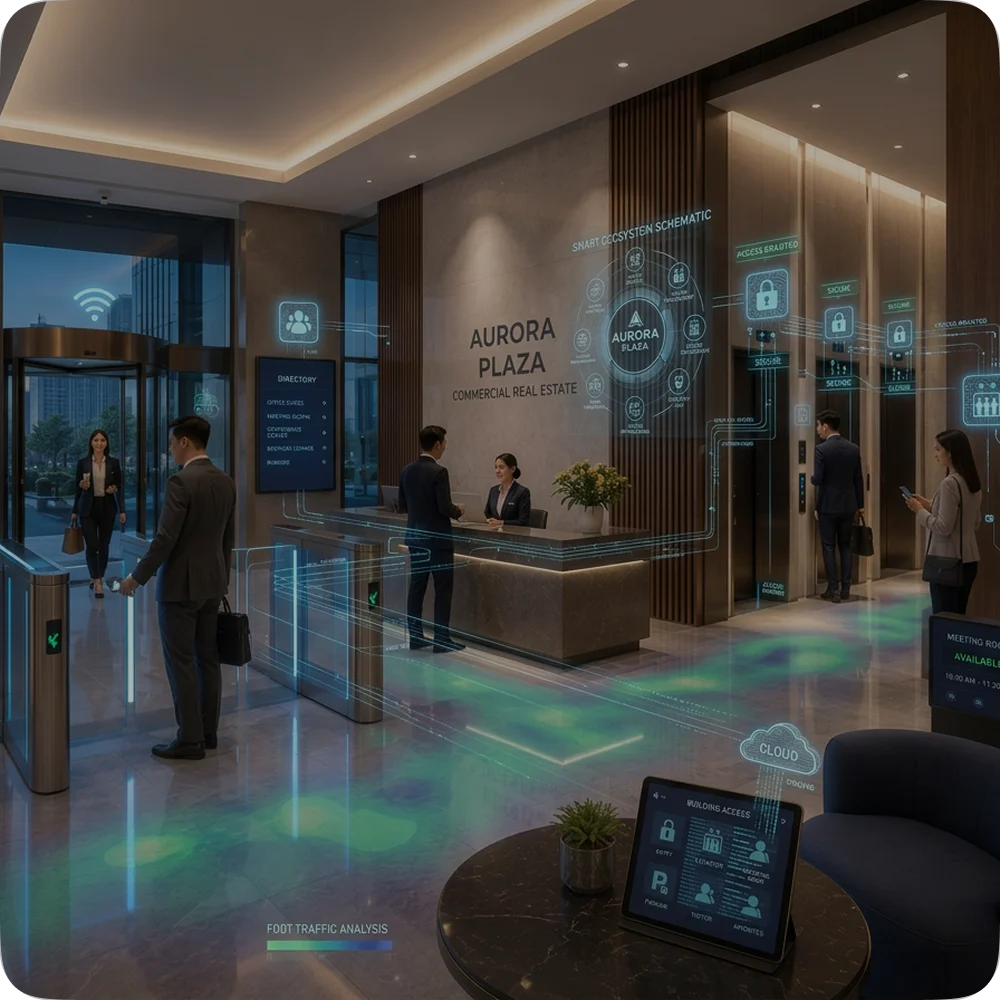
Smart Access Control in Commercial Real Estate
Smart Access Control in Commercial Real Estate 8 min reading timeUpdated on June 26, 2026Share this
10 min reading time
Updated on June 26, 2026
Share this article
Manufacturing facilities have always had security requirements.
Perimeter fencing, guard posts, visitor registers, lock and key systems. The basics of keeping a plant secure have not changed fundamentally in decades. What has changed is the standard to which manufacturers are now held when it comes to documenting, auditing, and proving who was where, when, and why.
Regulatory expectations have tightened across industries. Whether it is ISO 9001 quality management, industry-specific compliance frameworks in automotive or pharmaceuticals, or internal audit requirements driven by enterprise clients, the bar for traceability inside a facility has moved significantly. And the old approach of a sign-in sheet at the gate is nowhere near sufficient anymore.
Access control, in this context, is no longer just a security function. It is a compliance function.
In a manufacturing environment, not all areas carry the same risk profile. A general assembly line is very different from a server room, a chemical storage zone, a quality control lab, or a raw materials warehouse. Each of these areas may have specific access requirements based on safety regulations, quality standards, or contractual obligations with clients.
The question compliance auditors increasingly ask is not just whether access to these areas was restricted. It is whether that restriction was documented, enforced consistently, and auditable after the fact.
Manual systems struggle with all three of those requirements. A key handed to a contractor for a week may or may not be returned. A shared access card used across a shift has no individual accountability attached to it. A paper log at a restricted zone entry point is only as reliable as the person filling it in.
When an audit happens, or worse, when something goes wrong on the floor, the absence of a clear access trail creates significant exposure. Legally, operationally, and reputationally.
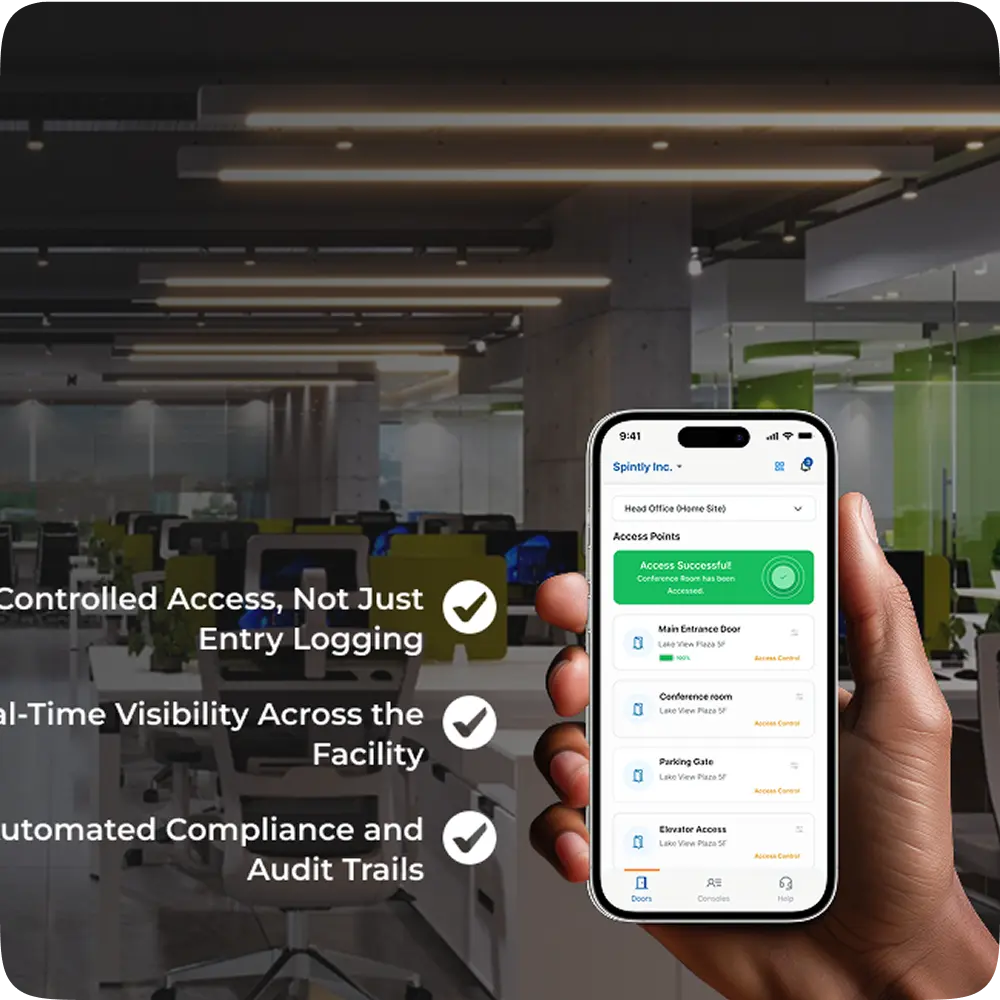
Digital, cloud-based access control replaces the ambiguity of physical credentials with a system that logs every entry event automatically, tied to a specific individual, at a specific time, at a specific access point.
That data does not need to be compiled manually for an audit. It is already there, structured, searchable, and exportable.
Zone-based access permissions mean that a production floor worker does not have access to the R&D lab, and that restriction is enforced at the hardware level, not dependent on a security guard’s judgment. A visiting auditor can be given temporary access to specific zones for a defined period, after which their credential expires automatically. A contractor working on a specific machine can have access limited to the area where that machine is located.
The granularity of control, and the documentation that comes with it, is what compliance frameworks increasingly require and what manual systems simply cannot provide at scale.
One of the more underappreciated access control challenges in manufacturing is the sheer volume of non-permanent personnel moving through a facility on any given day.
Contractors, maintenance engineers, equipment vendors, quality auditors, logistics partners. In a mid-to-large manufacturing plant, this population can be significant. Each of these individuals needs some level of access, for a specific purpose, for a defined period. And each of them represents a potential compliance gap if their access is not properly managed and documented.
Traditional visitor management at most plants is a reception desk, a paper log, and a visitor badge that offers no real zone-level control. It records that someone entered the building. It says nothing about where they went once inside.
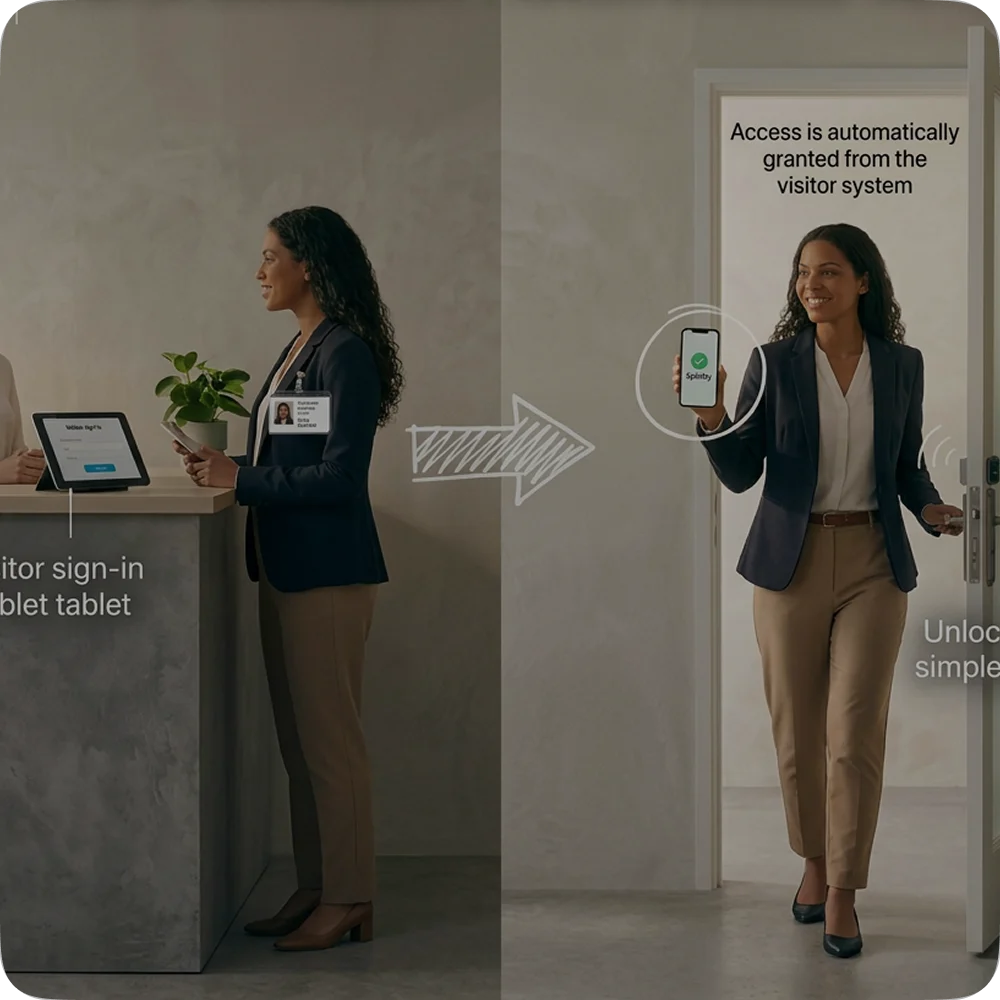
A digital visitor management system integrated with access control changes that entirely. Pre-registration, QR-based check-in, zone-specific access, and automatic expiry all become standard workflow rather than manual overhead. And every movement is logged.
In manufacturing, access control also intersects directly with worker safety.
Knowing who is in a facility at any given time is not just a security requirement. It is a safety one. In the event of a fire, an evacuation, or an accident on the floor, having a real-time headcount and location record for every person on site is critical. Manual systems, at best, give you a rough estimate based on a sign-in sheet that may or may not be current.
A cloud-based access system gives safety officers an accurate, real-time view of occupancy per zone.
That information is immediately useful in an emergency and increasingly required under occupational health and safety frameworks.
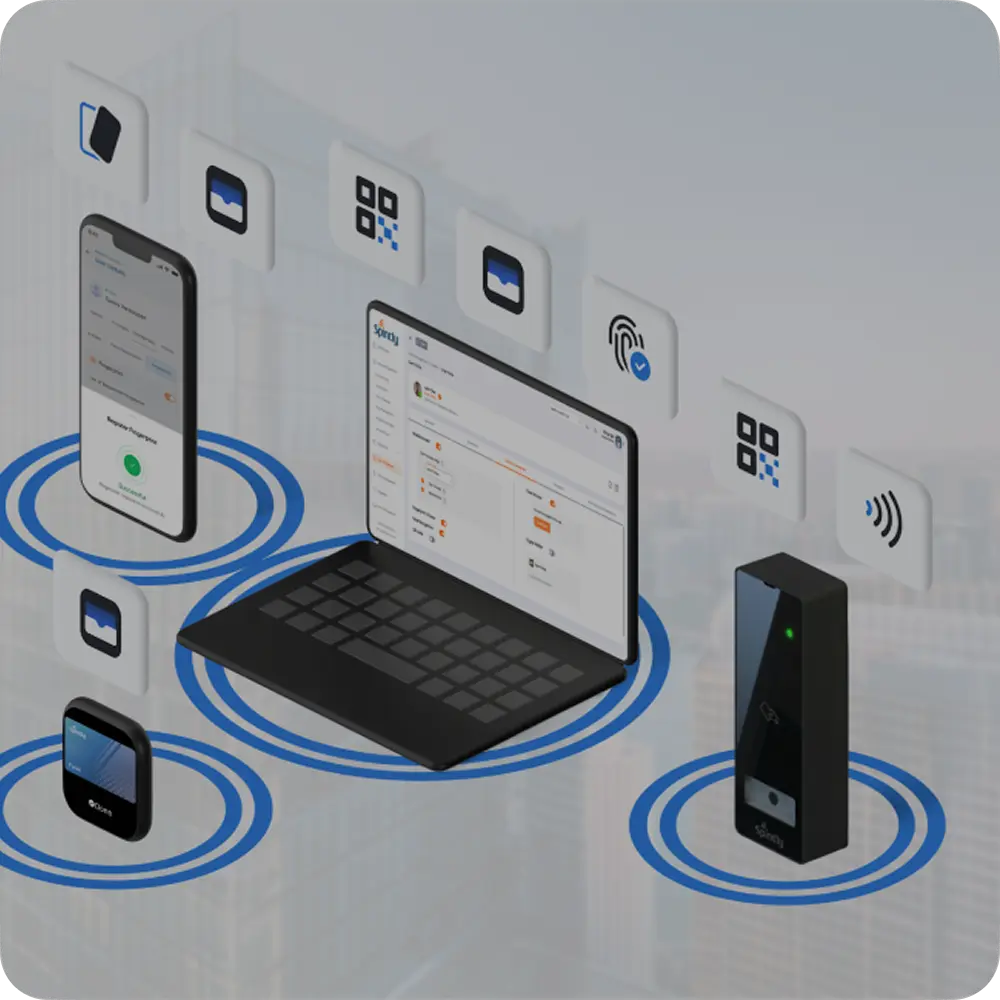
Spintly’s wireless access control platform is built to handle the complexity of manufacturing environments. The system supports zone-based access permissions, giving facility managers precise control over who can enter specific areas of the plant. Every entry event is logged automatically, creating an audit trail that is always ready without manual compilation.
The visitor management module handles contractor and visitor access with pre-registration, time-limited credentials, and host notifications. And because the platform is cloud-based and wireless, it can be deployed across large facilities without the cost and disruption of extensive cabling.
For manufacturing operations navigating stricter compliance requirements and more demanding audit cycles, it is a practical and proven infrastructure upgrade.
Smart Access Control in Commercial Real Estate 8 min reading timeUpdated on June 26, 2026Share this
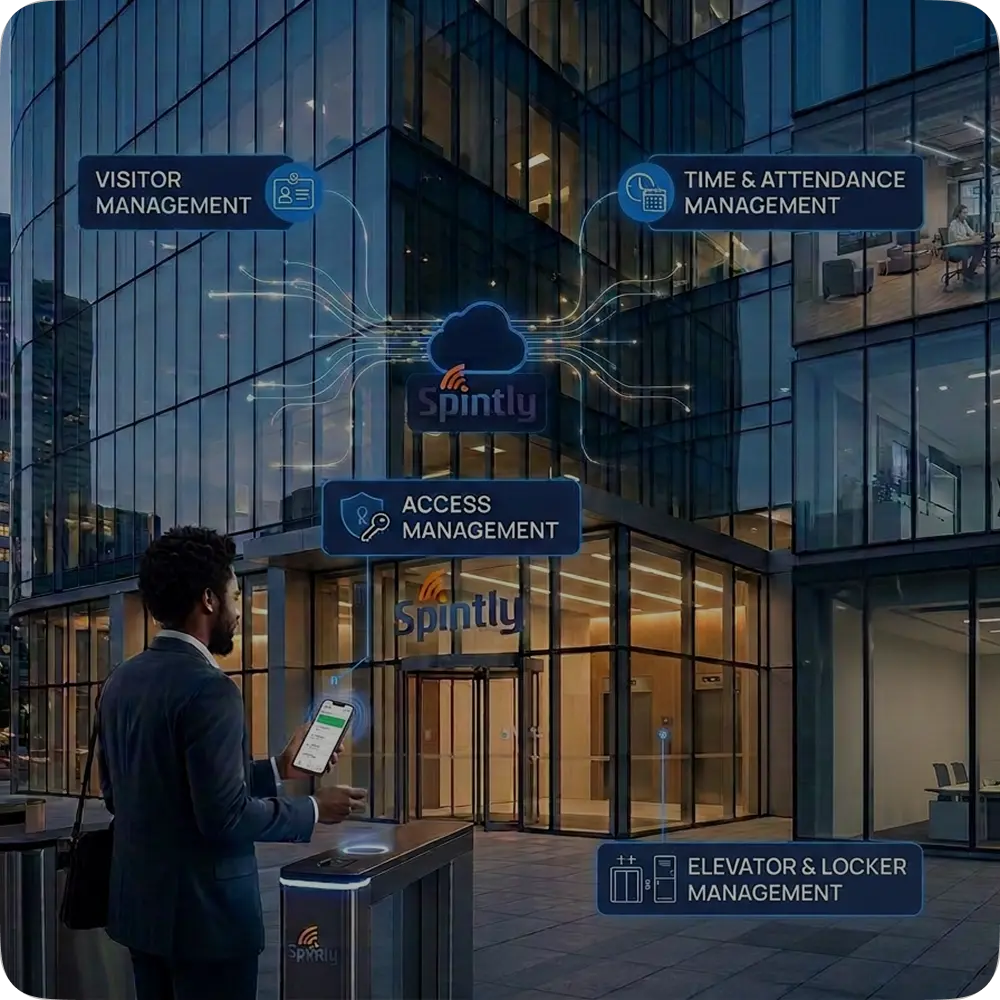
How Access Control Fits into the PropTech Ecosystem 8 min reading timeUpdated on June 26, 2026Share
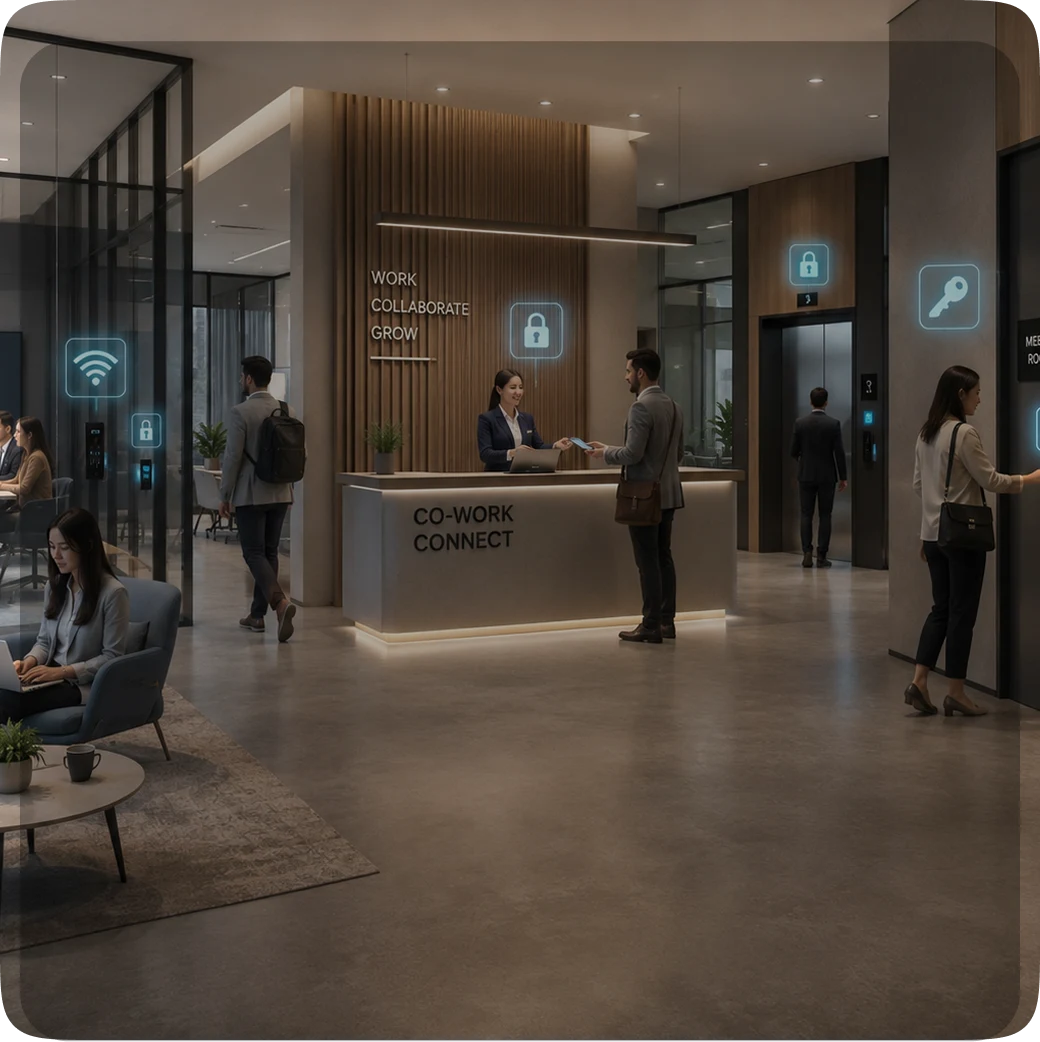
How Co-Working Spaces Simplify Access with Wireless Systems 10 min reading timeUpdated on June 26, 2026Share
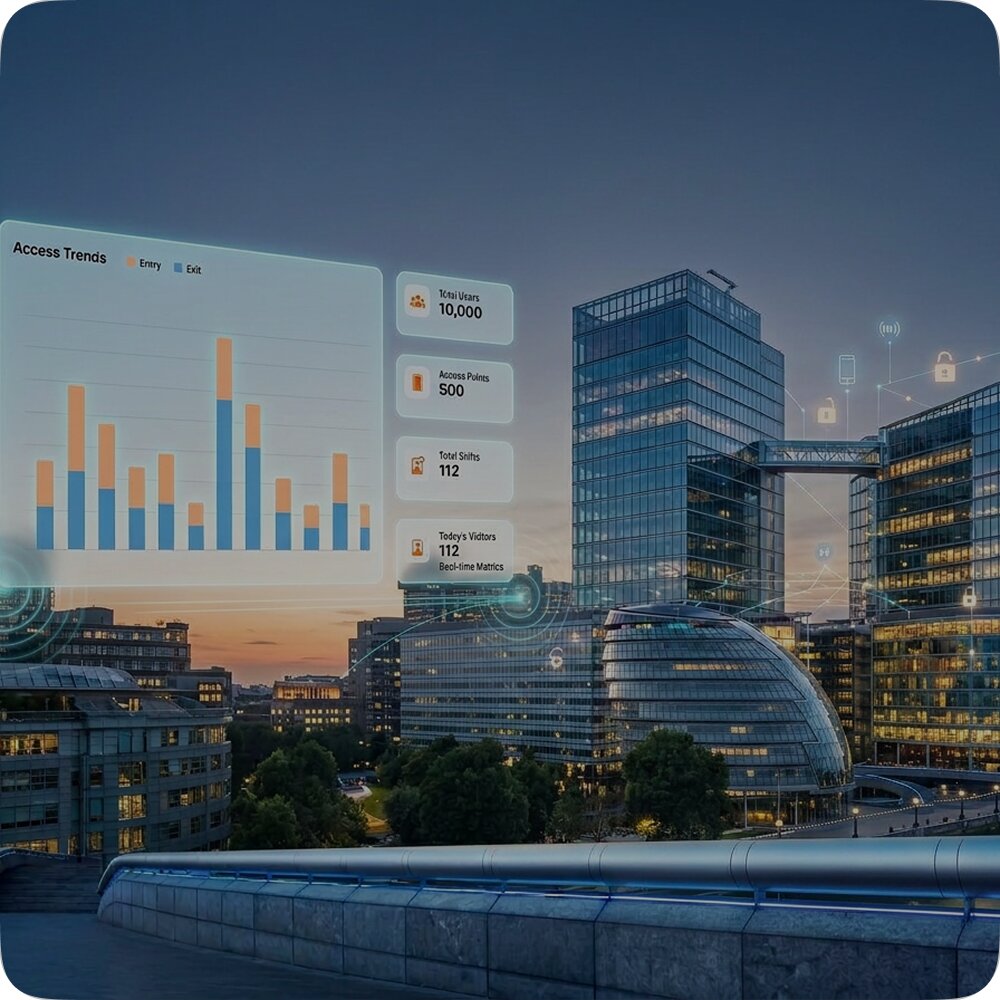
Upgrading to Wireless Access Control: A Guide for Commercial Buildings 10 min reading timeUpdated on June
Inside Spintly’s Credential Management Platform- Architecture, Flow, and Core Benefits 10 min reading timeUpdated on May
Visitor Management + Access Control: The Perfect Duo Walk into any modern workplace today, and you’ll
The Role of AI in Modern Access Control Systems Access control has always come down to
Introducing Scypher- Spintly’s Credential Management Platform for Digitising Access Control For decades, enterprise access control has
Inside Spintly’s Credential Management Platform- Architecture, Flow, and Core Benefits In the first blog, we discussed
Comparing Access Control Architectures: Wiegand vs OSDP vs BLE Mesh Access control systems rely on communication