
How OptiSpaces.ai Powers Smart Locker Systems with Multi-Credential Access
How OptiSpaces.ai Powers Smart Locker Systems with Multi-Credential Access 12 min reading timeUpdated on July 23,
9 min reading time
Updated on July 9, 2026
Share this article
For decades, physical security operated on a simple premise: detect the breach, respond to the breach. Cameras recorded. Alarms triggered. Guards were dispatched. The system was designed to document what went wrong, not to anticipate it.
That model made sense when the alternative was science fiction. It makes considerably less sense now.
AI has moved from a promising technology to a deployable one across most enterprise verticals, and physical security is no exception. The shift it enables is not incremental. It is categorical: from systems that respond to incidents to systems that work to prevent them from occurring in the first place.
Unauthorised access rarely looks dramatic. It does not announce itself. What it typically looks like, in the data, is a pattern that deviates quietly from the norm. An access attempt at 2am from a credential that usually operates between 9am and 7pm. A tailgating event that the camera caught but no alert was triggered. A visitor badge used in a server room it was never meant to reach.
Each of these anomalies, taken individually, might not trigger a human reviewer’s concern. Collectively, they are the signature of a problem. AI systems trained on access data can identify these patterns in real time and flag them before they escalate, not by applying rigid rules, but by learning what normal looks like for a given facility and detecting meaningful deviation from it.
The term gets used loosely, so it is worth being specific. Predictive security in the access control context typically involves several distinct capabilities.
Anomaly detection identifies access events that fall outside established behavioural baselines. This includes unusual timing, unusual location sequences within a building, or credentials being used in ways that contradict the access policy.
Risk scoring assigns a dynamic risk level to access events based on contextual factors, including time, location, credential type, and historical behaviour. High-risk events are escalated automatically for review rather than buried in a log that nobody reads.
Behavioural biometrics, at the more sophisticated end, use the way a person interacts with access points, including gait analysis from video or touchpad interaction patterns, as an additional authentication layer that is extremely difficult to spoof.
Any security professional who has worked with rule-based alert systems will know the exhaustion of false positives. When everything is an alert, nothing is. AI-based systems reduce this problem significantly by using probabilistic rather than binary logic. The system does not flag every deviation. It flags deviations that are statistically unusual given everything it knows about the environment.
This means security teams spend less time chasing noise and more time responding to genuine signals.
It is important to acknowledge that AI-powered security raises legitimate questions about surveillance and data use. Behavioural monitoring in the workplace sits in a complex regulatory and ethical space that varies significantly across jurisdictions.
The responsible deployment of predictive security requires clear policies about what data is collected, how long it is retained, who can access it, and how it is used. These are not obstacles to implementation. They are the conditions under which trustworthy implementation is possible.
Spintly’s platform generates the kind of structured, real-time access data that AI and analytics systems require to function well. Its cloud architecture means that data is accessible, analysable, and actionable rather than locked in an on-premises box that nobody queries until something goes wrong.
As AI capabilities continue to mature, the access control systems that will deliver the most value are the ones built on clean, open, cloud-native data infrastructure. The intelligence layer is coming. The question is whether your access system is ready to support it.
How OptiSpaces.ai Powers Smart Locker Systems with Multi-Credential Access 12 min reading timeUpdated on July 23,
Designing Role-Based Elevator Access in Multi-Tenant Buildings with OptiSpaces.ai 12 min reading timeUpdated on July 23,
How Elevator Access Control Works in a Wireless, Multi-Credential Environment 12 min reading timeUpdated on July
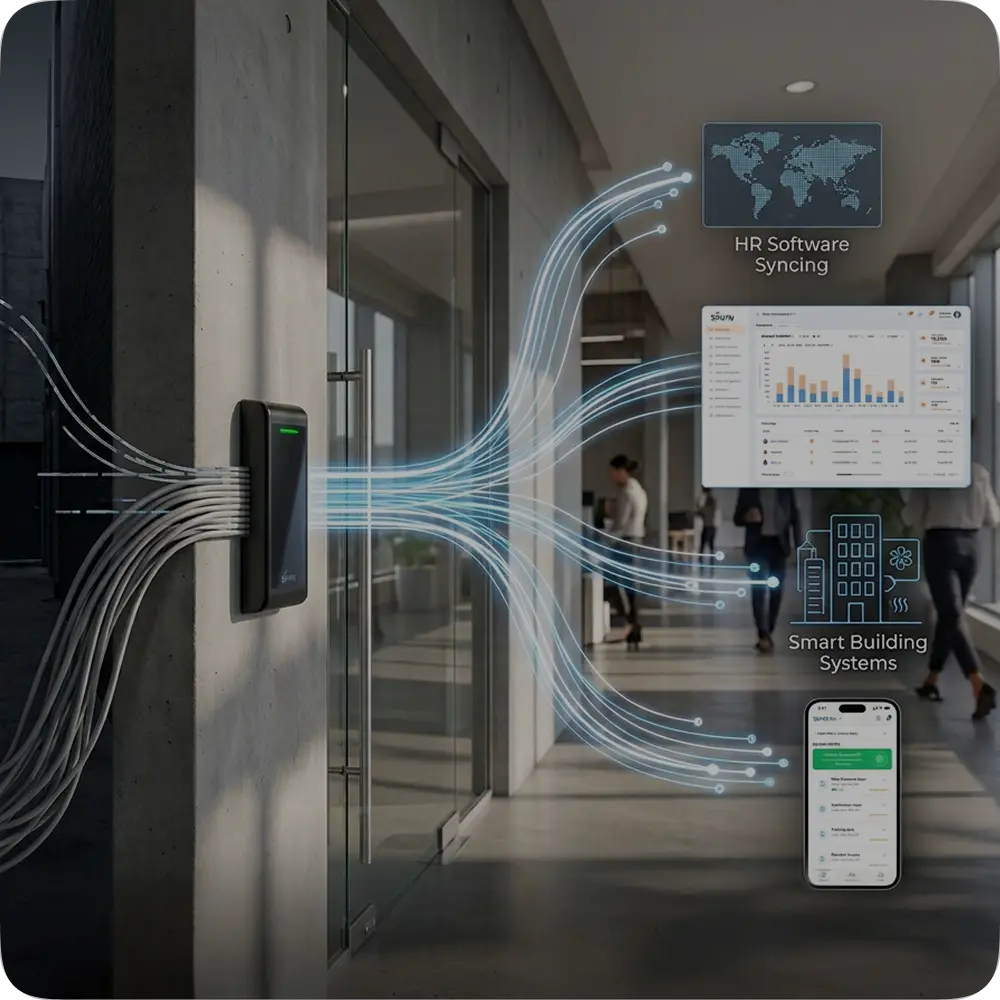
API-First Access Control: Why Openness Wins 7 min reading timeUpdated on July 9, 2026Share this article
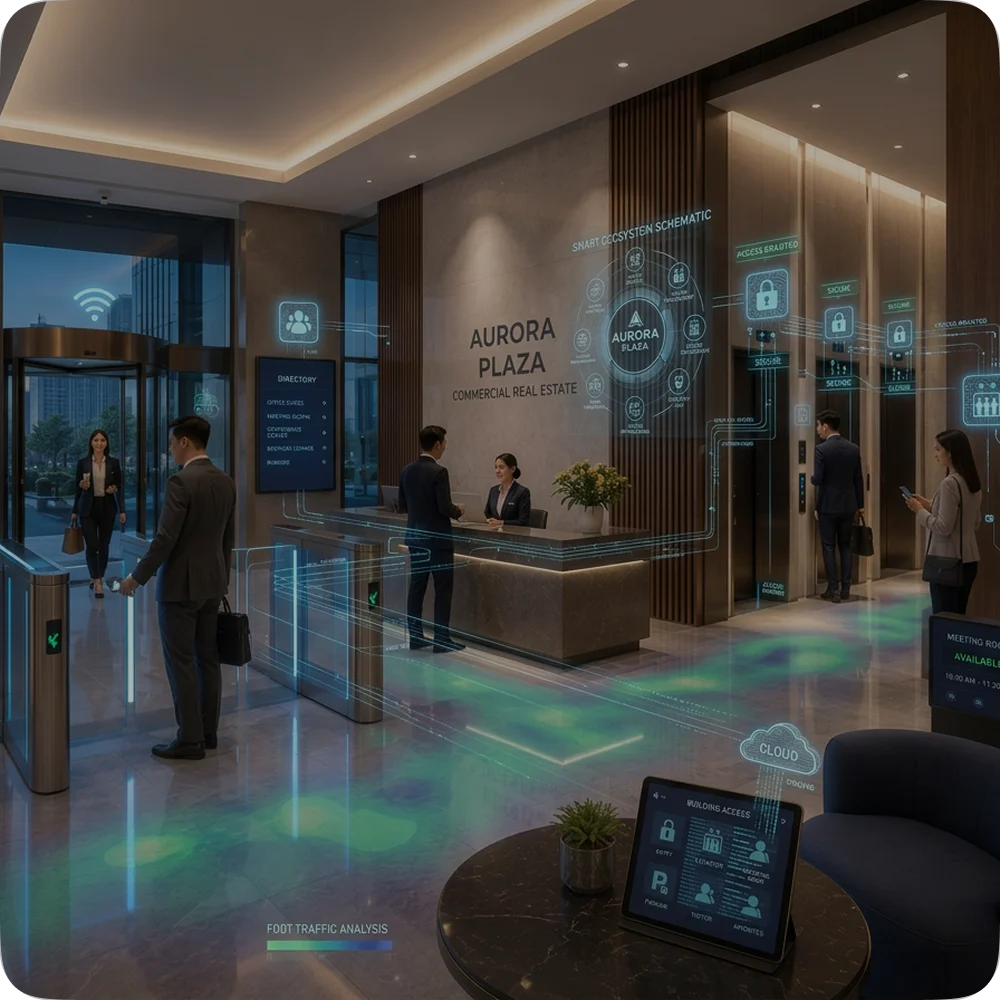
Smart Access Control in Commercial Real Estate 8 min reading timeUpdated on June 26, 2026Share this

Access Control in Manufacturing: Traceability and Compliance 10 min reading timeUpdated on June 26, 2026Share this
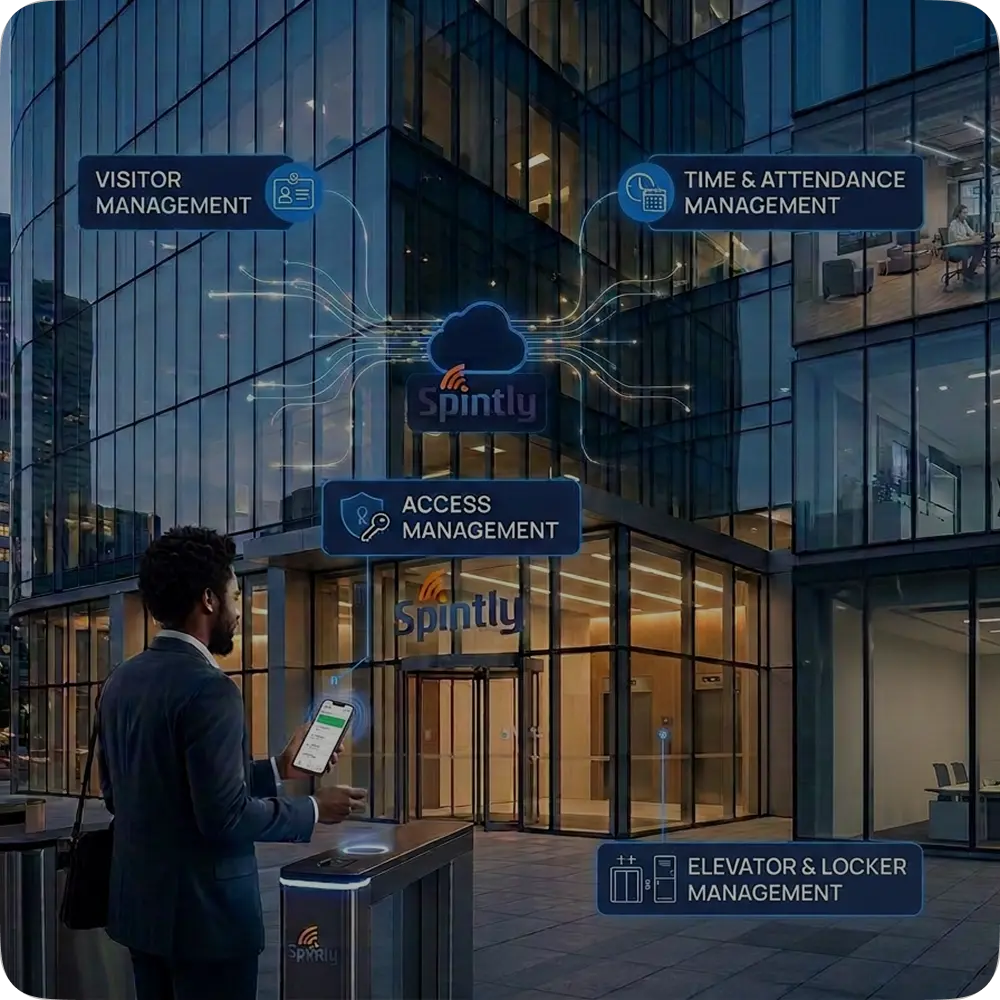
How Access Control Fits into the PropTech Ecosystem 8 min reading timeUpdated on June 26, 2026Share
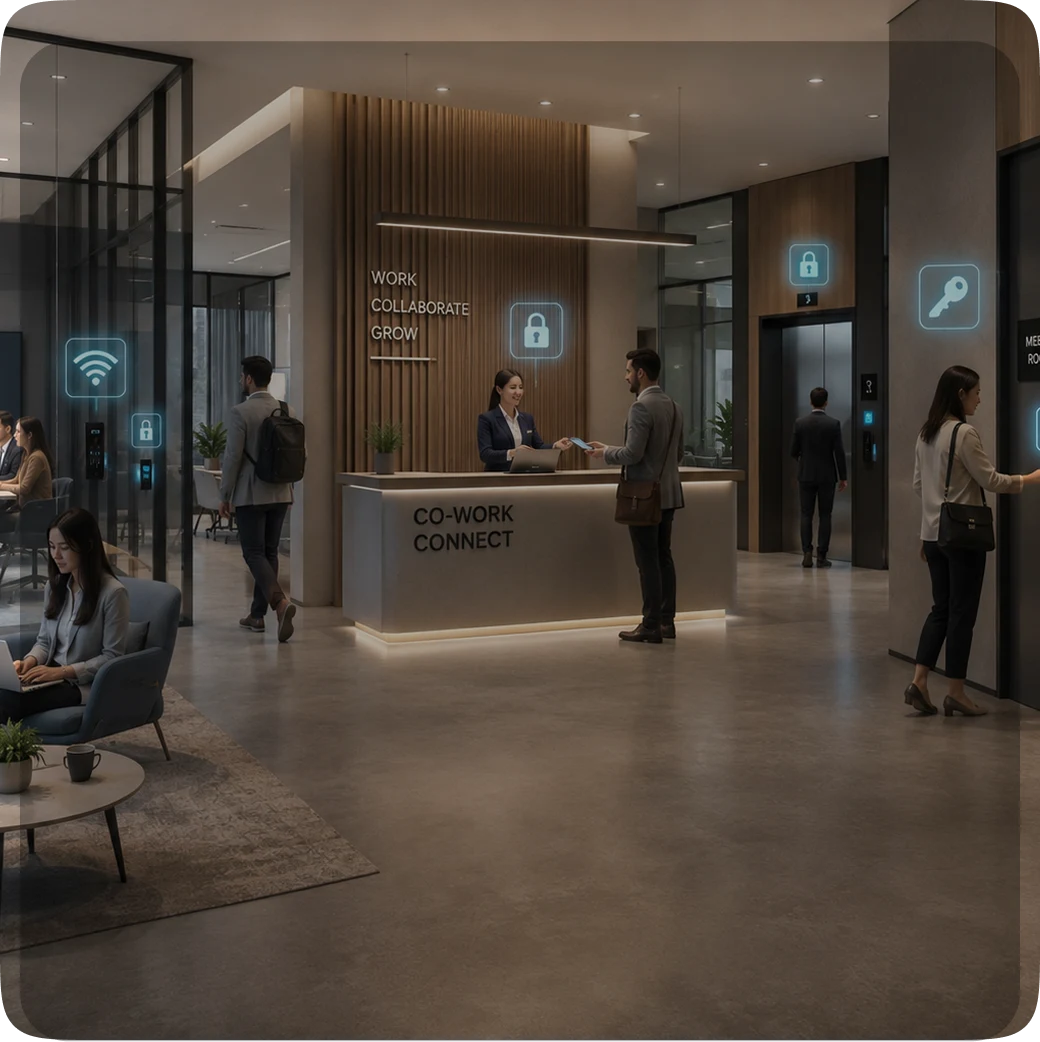
How Co-Working Spaces Simplify Access with Wireless Systems 10 min reading timeUpdated on June 26, 2026Share
Upgrading to Wireless Access Control: A Guide for Commercial Buildings 10 min reading timeUpdated on June
Inside Spintly’s Credential Management Platform- Architecture, Flow, and Core Benefits 10 min reading timeUpdated on May